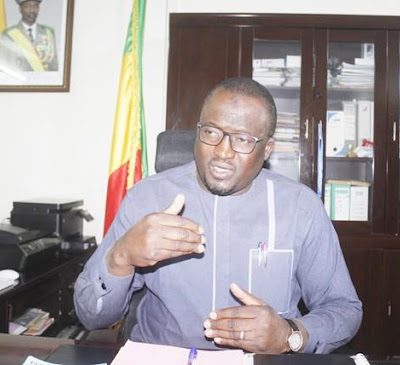
Sékouli Fadjadji Touré: “The results reflect hospital data”
News
-
- anaesdma
- Nov 12, 2023

The Director General of the National Agency for the Evaluation and Accreditation of Healthcare Facilities (ANAES) discusses the benefits of hospital evaluation, the criteria considered, and the shortcomings observed in these healthcare facilities.
L’Essor: ANAES has announced the results of the 4th edition of hospital evaluation for the year 2021. What analysis do you make of it?
Sékouli Fadjadji Touré: I would like to emphasize that the evaluation of hospital performance is a necessity because it truly allows us to assess the level of indicators. It also gauges the degree of involvement of users in the continuous improvement of the quality of care. Our evaluation is based on the year N minus 1 for greater credibility and efficiency. There is a cycle related to the evaluation called the triennial cycle.
The indicators are developed over three years. We conduct this evaluation N minus 1 because there are indicators whose results need to be looked at throughout the year. The result of this evaluation has identified the real problems encountered by the evaluated hospital establishments, measured user satisfaction, and made corrections to improve the quality of services to the great satisfaction of the population.
L’Essor: What are the criteria for evaluating hospitals?
Sékouli Fadjadji Touré: These are objective criteria that have been validated by mutual agreement not only with hospitals but also with the Ministry of Health and Social Development. We first organize a workshop on all indicators. It is a participatory process during which hospital managers are involved at all levels. That’s why the results are not disputable. They sincerely reflect the data from the hospitals.
In addition, the evaluators are practitioners, including doctors, administrators, specialists in hospital management, and health economics. We had 17 indicators for the recently concluded cycle, including 13 general indicators that apply to second and third reference hospitals with a general and specialized vocation. The indicators focused on the satisfaction rate of users, compliance with the management of hospital waste, and the emergency care system.
Also, the average availability rate of 10 biomedical tests, retrievable files from the entry desk by a unique number, the compliance rate of medical records, and the average functionality rate of administrative and management organs. There are also 4 specific indicators.
Thirteen public hospitals and the Mother and Child Hospital or Le Luxembourg underwent this evaluation. We will see how to integrate private hospitals such as the Mother and Child Hospital in Kayes gradually. We will conduct evaluations based on 23 indicators in the coming years.
L’Essor: Are the recommendations from the hospital performance evaluation being implemented?
Sékouli Fadjadji Touré: Certainly, these recommendations are being implemented. During evaluations, shortcomings are identified, and recommendations are made. The evaluation of hospital performance for the year 2021 allowed us to take stock of the implementation of hospital performance systems. It also noted the establishment and functionality of the hospital monitoring and animation committee in the 14 establishments, as evidenced by the completion of self-evaluation.
This committee is responsible for implementing recommendations under the supervision of the Ministry of Health and Social Development’s office. Despite all the shortcomings, since we started this process, the evaluated hospitals have shown significant progress.
Initially, many evaluation data that were very low have improved significantly. The level of indicators is progressing in several hospital establishments compared to 2020. However, neonatal and infant deaths remain a concern in almost all evaluated hospitals.
L’Essor: Are you convinced of the commitment of other hospitals, given that the University Hospital Center (CHU) of Kati Bocar Sidy Sall and the hospital in Sikasso continue to top the list?
Sékouli Fadjadji Touré: Of course! There is a commitment from other structures because the evaluation itself is an obligation. It is an essential component of public policy. Everyone would like to be honored. Beyond that, it is an emulation. The evidence is that the National Odonto-Stomatology Center Pr Hamady Traoré has disrupted the Hospital of Mali to take the third place.
These results show that the three award-winning structures make a lot of efforts. Others are on the same path, but they still have shortcomings to address. There is a strong enthusiasm for this evaluation today. Hospitals understand the need to constantly strive for quality care. We therefore congratulate the management of CHU Pr Bocar Sidy Sall, which has been able to retain its leading position. It is very significant.
L’Essor: What shortcomings were observed during the evaluations of the 4th edition?
Sékouli Fadjadji Touré: These are related to the emergency care system, the management of hospital waste, and the high rate of neonatal and intra-hospital infant mortality in our structures that record a large number of deliveries. If we respect the health pyramid, parturients should not end up at these hospitals. The Ministry of Health is taking steps to ensure that the evacuation-reference system is respected by users.
L’Essor: What message do you have to convey?
Sékouli Fadjadji Touré: Our goal is to ensure that all hospital structures, including private ones, reach a score of 100%. This year, ANAES will evaluate the performance contracts signed between hospital directors and the supervisory authority. I invite the population to not only trust our hospital structures but also make suggestions to contribute to the promotion of our hospital establishments.
Today, efforts are made by all personnel in these care structures for more quality despite the difficulties. These are inherent in any