EVALUATION AND ACCREDITATION OF HEALTH ESTABLISHMENTS: “PUBLIC AND PRIVATE ARE ALL CONCERNED”
News
-
- anaesdma
- Nov 12, 2023

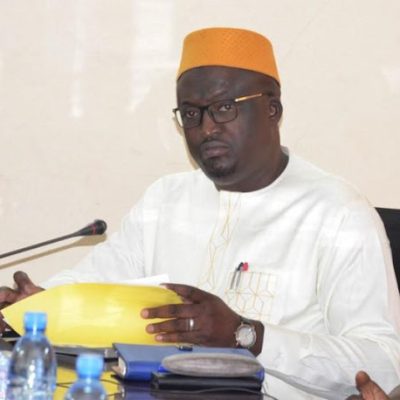
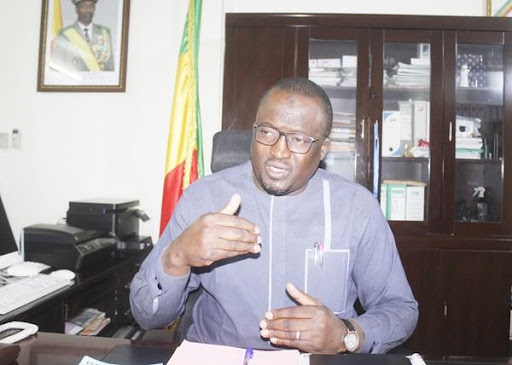
This new Agency is equipped with a system to encourage healthcare facilities to engage in continuous improvement of the quality of care. Its director general, Sékouli Fadjadji Touré, explains the challenges to overcome for the success of this noble mission.
L’Essor: ANAES was created on the ashes of the National Hospital Evaluation Agency (Aneh) with new responsibilities. Why this expansion of missions?
Sékouli Fadjadji Touré: Under the impetus of the Minister of Health and Social Development, Mrs. Diéminatou Sangaré, ANAES was created in February 2022 in response to several aspects, including the expansion of the healthcare system through the creation of clinics, cabinets, community health centers (Cscom), and Reference Health Centers (Csref) that are being transformed (for some) into district hospitals since 2018.
This evolution requires providing quality care to the population. It is pointless to treat patients in conditions where there is no quality. The second aspect is that the facilities must be accredited.
This aims to identify those that meet quality standards. We can no longer content ourselves with providing care that is not of quality. Based on these observations, the need to review the missions of Aneh was shared by the head of the Health department, who has always advocated for quality in healthcare.
It was necessary to broaden the evaluation missions to all healthcare facilities, both public and private. ANAES is responsible for conducting external evaluations of healthcare facilities regarding the quality of care, cost control, and the impact in terms of public and medico-economic health, to evaluate healthcare facilities for their classification in the reference level in the healthcare system.
It is also about promoting the development of the evaluation of care and professional practices. ANAES also has a mission to establish and implement accreditation procedures for healthcare facilities, as well as to propose to the minister responsible for health their accreditation and propose the subscription and withdrawal of subscription to public insurance organizations.
L’Essor: What will be the contributions of the Agency to our healthcare system, in terms of access to quality care?
Sékouli Fadjadji Touré: The ANAES system is very good. The State has given itself the means, through this service, to guarantee the quality of care. When a facility is accredited, the quality gradually improves, and it offers ideal conditions for patient care. The evaluation of healthcare facilities will therefore bring healthy competition in improving care for patients. This is done through the evaluation of achievements and shortcomings, as well as recommendations to the Minister of Health and Social Development for quality improvement.
L’Essor: ANAES has the mission of accrediting healthcare facilities. Is this the beginning of a fight against the proliferation of private healthcare structures that do not meet the requirements?
Sékouli Fadjadji Touré: Mali did not have a dedicated accreditation service. There are enforcement services, including health inspection. As soon as the process starts, it is the population that will sanction by refusing to go to these non-accredited structures. This accreditation process is participatory. The vision of the Health and Social Development department is to encourage managers of private or public structures to adopt the quality approach through tools and standards.
Each service level will have its standards that will be developed and validated by the authorities. The population will have the necessary information regarding the accreditation of healthcare facilities. Other structures will be involved in the accreditation process, such as the Directorate General of Health, the National Health Insurance Fund (Canam), and the National Institute of Public Health (INSP). The Minister in charge of Health has the discretion to accredit or not the evaluated structures. This accreditation can be withdrawn once the structure no longer meets the standards.
L’Essor: Which healthcare facilities will join the list of traditionally evaluated hospitals? How do you plan to meet this challenge?
Sékouli Fadjadji Touré: Aneh was focused on hospitals. This time, evaluations concern all public and private healthcare facilities. The health orientation law gives a patient the free choice to seek treatment wherever they want. That is the reason that implies this change so that all healthcare facilities offer quality to patients.
L’Essor: What are your expectations for the success of these new missions assigned to your Agency?
Sékouli Fadjadji Touré: We need technical support in terms of capacity building. We have highly experienced professionals in the field of evaluation. But accreditation is a new area. We are in the process of developing the tools needed for accreditation. Today, we have the tools needed for Cscom (Community Health Centers).
We will start accrediting at least 45 Cscom for the year 2023. We will develop other tools by reference level, namely for district hospitals, second, third, or even fourth reference, especially private ones.
Securing funding is one of the recommendations of the first session of our board of directors, held on January 26th. The state and technical and financial partners must provide the necessary support to ANAES to meet the challenge related to human, material, financial, and logistical resources.
So that it truly plays its part effectively and efficiently. So far, we have always benefited from the support of the State, but also from the professional health orders. We want everyone to play their role because we are all potential patients.
Interview by
Mohamed DIAWARA
Reporting for the “L’Essor” newspaper